"The 'Atomic Bus' and 'Artificial Mini Sun' Illuminating Gyumri: A New Era of Nuclear Energy
Nuclear energy is undergoing significant changes. Today, we'll discuss two fascinating new technologies that could revolutionize the energy sector:
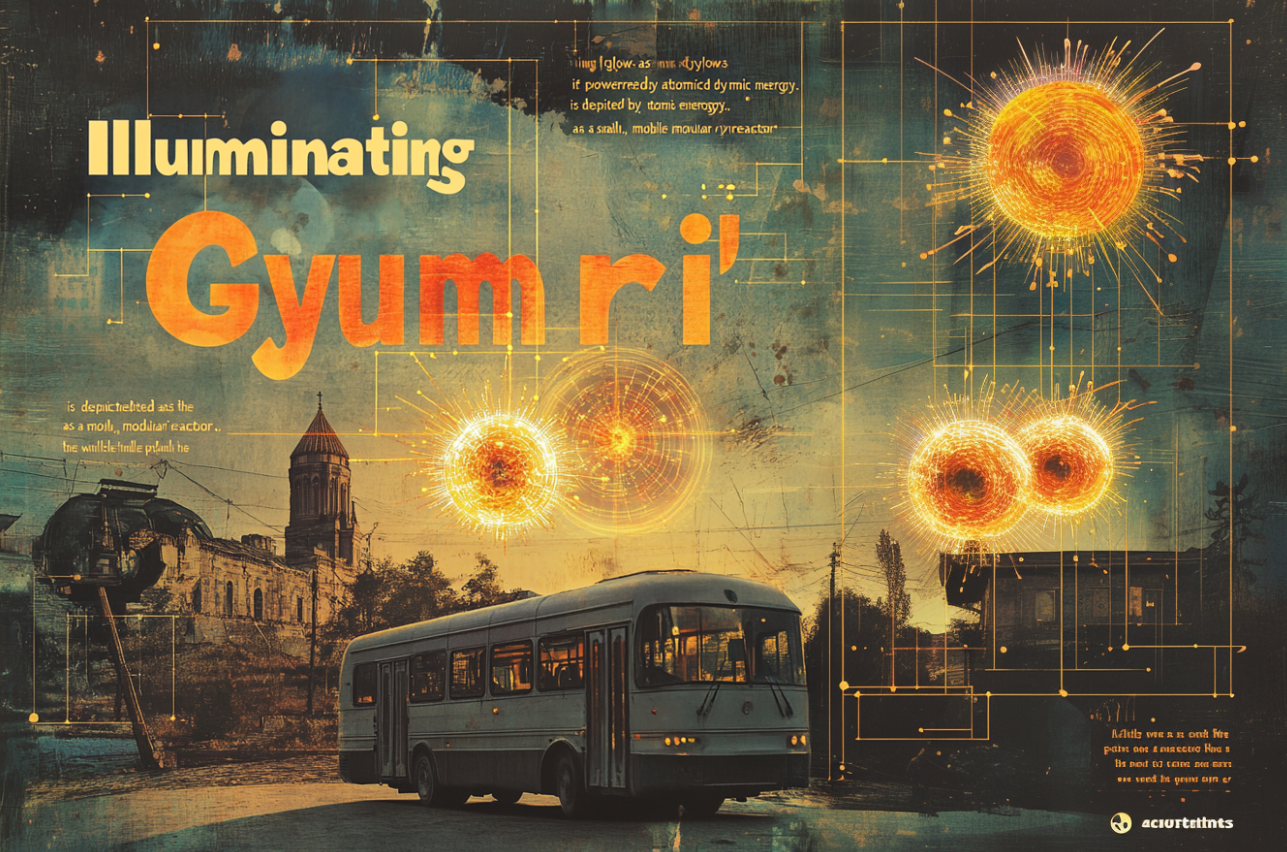
Small Modular Reactor (SMR) or "Atomic Bus": These SMRs are a new, compact version of nuclear energy.
Key features:
Size: A reactor the size of a bus (approximately 2.7m x 12m)
Power: One SMR can produce up to 60 MW of electricity, sufficient for about 50,000 homes
Safety: Equipped with passive safety systems that operate without human intervention or external energy
Easy installation: Can be assembled in a factory and transported as a whole
Flexibility: Multiple modules can be connected for higher power output
As a hypothetical example, imagine Gyumri wanting its own clean energy source. One SMR could meet most of the city's energy demand while occupying a relatively small area.
Comparison with traditional nuclear power plants: SMRs occupy less space and have lower capital costs. However, they produce less energy and lack long-term operational experience.
International experience:
International examples in detail:
NuScale Power (USA):Developing 77 MW SMRs. Each module is designed to produce enough electricity for about 60,000 homes. The company plans to build its first commercial plant at Idaho National Laboratory, consisting of 6 modules with a total capacity of 462 MW. The project, called the Carbon Free Power Project, is scheduled to start operation in 2029. NuScale's SMRs stand out for their compact size and high safety level thanks to passive cooling systems.
"Akademik Lomonosov" (Russia):The world's first floating nuclear power plant. It's a 144-meter-long barge with two KLT-40S reactors, each with a capacity of 35 MW. Since 2019, it has been supplying electricity and heat to the city of Pevek in Chukotka. This project aims to provide energy to remote, hard-to-reach areas where building traditional energy infrastructure is challenging.
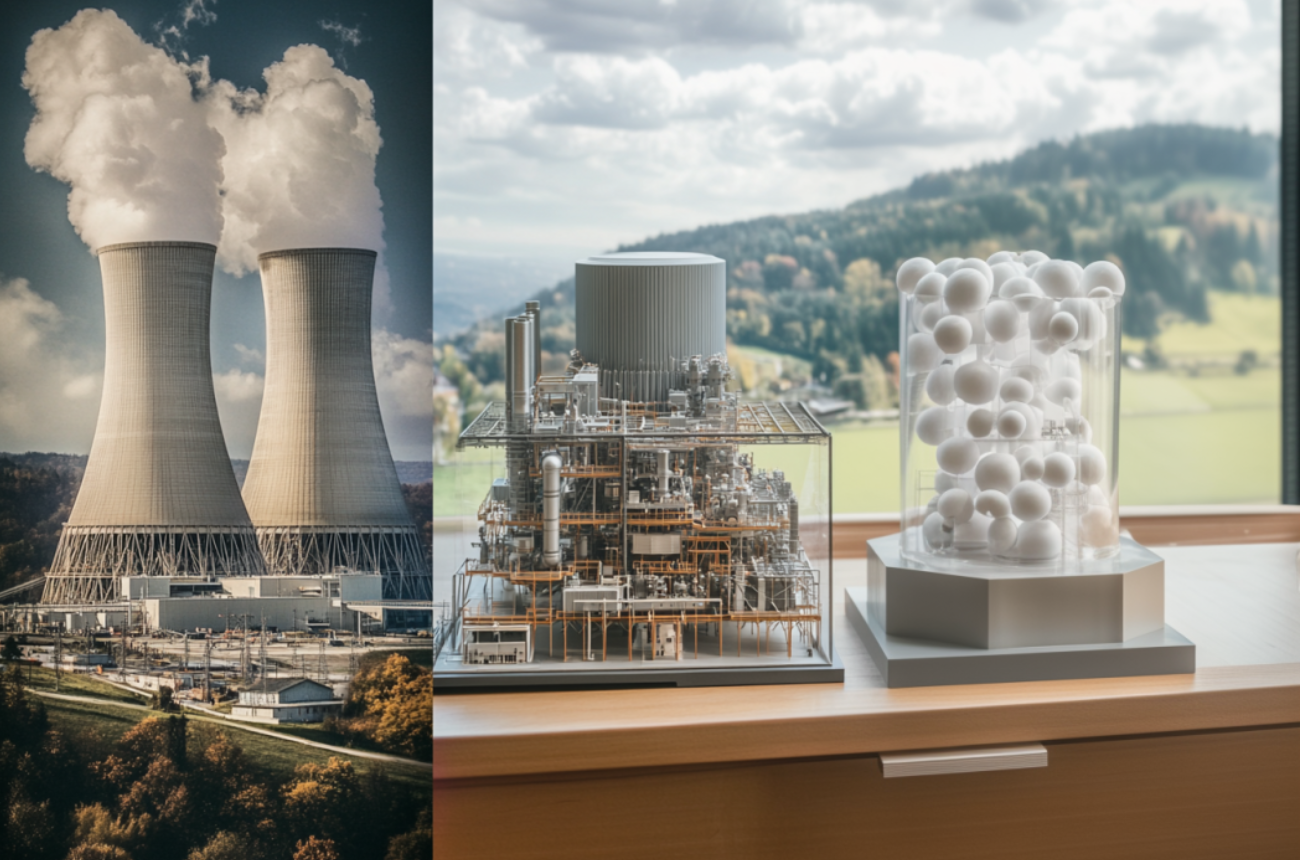
HTR-PM reactor (China):The Shidaowan HTR-PM (High Temperature Reactor-Pebble-bed Module) is considered the world's first commercial fourth-generation nuclear power plant. It began operation in 2021. The HTR-PM consists of two reactors with 250 MW thermal power each, together producing 210 MW of electrical power. This reactor uses spherical fuel elements and helium cooling, allowing for high safety and efficiency.
These three examples demonstrate the diversity and applicability of SMR technology in various conditions, from land-based stations to floating power plants.
Thermonuclear Fusion or "Artificial Mini Sun": This is another method of nuclear energy production that mimics the processes occurring inside the sun.
Key features:
Fuel: Uses deuterium and tritium, hydrogen isotopes abundant on Earth
Safety: Unlike nuclear fission, fusion cannot lead to an uncontrolled reaction
Environmental cleanliness: Produces helium, a harmless gas, and doesn't generate long-lived radioactive waste
Energy production: Theoretically, 1 kg of fusion fuel can produce as much energy as 8 tons of oil
Challenges:
Thermonuclear fusion is still in the experimental stage. The main challenges are long-term plasma containment and achieving a positive energy balance.
Recent achievements:
In December 2022, the US National Ignition Facility (NIF) achieved fusion ignition for the first time, producing more energy than was used to start the reaction. This is a significant step towards commercial-scale thermonuclear fusion.
Successful example:
JET (Joint European Torus): The experimental reactor in the UK produced a record amount of thermonuclear energy in 2022. It generated 59 megajoules of energy in 5 seconds, a record in the history of thermonuclear fusion. This nearly doubled the previous record set in 1997.
JET is located in Culham, Oxfordshire (UK). It's the world's largest and most powerful operational tokamak (a magnetic confinement device for thermonuclear fusion). The reactor uses a mixture of deuterium and tritium, two hydrogen isotopes heated to 150 million degrees Celsius to create plasma.
Moreover, in December 2023, the JET (Joint European Torus) thermonuclear experimental device set a new world record by producing 69 megajoules of energy through steady and controlled thermonuclear fusion. This experiment was part of a campaign to verify operational scenarios for future thermonuclear devices. JET uses deuterium-tritium fuel, similar to that planned for ITER and future thermonuclear power plants. This achievement is a crucial step in the development of the ITER project and future thermonuclear power plants.
Gevorg Zadoyan, a second-year student of nuclear energy at the Institute of Energy of the National Polytechnic University of Armenia, told stemnews.am: "SMRs and thermonuclear fusion could revolutionize not only Armenia's but also the global energy system. In recent years, scientists have made significant breakthroughs in the development of these two technologies. SMRs can provide stable energy for remote areas and reduce our dependence on imported fuel. At the same time, thermonuclear fusion promises an almost inexhaustible and environmentally clean energy source.
However, it's important to note that these technologies still face many challenges. For SMRs, the issues of nuclear waste management and long-term safety are not yet resolved. In the case of thermonuclear fusion, stable energy production that exceeds the input energy has not yet been achieved. Additionally, both technologies require enormous investments and highly qualified specialists, which could be problematic for developing countries, including Armenia.
According to recent research, the practical application of these technologies could begin in the coming decade. However, it's important to consider the challenges, such as personnel training and the development of new safety standards."
Why are these technologies important?
Clean energy: Both do not emit CO2, helping to combat climate change
Safety: These new technologies reduce the risk of radioactive accidents
Accessibility: SMRs can provide energy to small towns or remote locations
Future energy: Thermonuclear fusion promises an almost inexhaustible energy source
However, it should be noted that these technologies are still in the development stage and have their limitations. Their large-scale implementation requires significant investments and technological advancements.
 .
.
Financial aspect: According to the International Energy Agency (IEA), the construction costs of one SMR can range from 800 million to 3 billion USD, depending on the power output and technology. Investments in thermonuclear fusion are even larger: the ITER project alone is estimated to cost around 22 billion euros.
Implementation timeline:
SMRs: The first commercial SMRs are expected to start operation between 2025-2030.
Thermonuclear fusion: The ITER project plans to achieve first plasma in 2025, while commercial-scale electricity production may become possible by 2050.
These new technologies could greatly change our lives. Imagine a future where small towns have their own "atomic bus," and large cities are powered by an "artificial mini sun." This could change our perceptions of energy and the environment.
However, it should be considered that the widespread implementation of these technologies requires not only technical solutions but also public acceptance, legislative changes, and significant financial investments.
Risks and challenges:
Safety: Although new technologies are considered safer, there are still concerns about potential accidents and radioactive material leaks.
Waste management: SMRs also produce radioactive waste, and its safe storage and recycling remain a challenge.
Economic efficiency: The competitiveness of these technologies with traditional and renewable energy sources still needs to be proven.
Technological complexities: Especially in the case of thermonuclear fusion, there are still many technical issues that need to be overcome.
Public perception: Public attitudes towards nuclear energy are often negative, which could hinder the implementation of these technologies.
Conclusion:
The new era of nuclear energy promises a revolution in the energy sector. SMRs and thermonuclear fusion could solve many energy security, environmental, and economic problems. However, their successful implementation requires a comprehensive approach, taking into account all technical, economic, social, and safety aspects."
Related materials