
Mathematics in Art: When Numbers Transform into Beauty
Introduction
Art and mathematics may seem distant from each other. However, these two fields have been closely interconnected for centuries, creating some of humanity's most magnificent works. The ancient Greeks believed that the universe was built on mathematical laws, and art should reflect this harmony. This idea became one of the cornerstones of Western art.
The Golden Ratio: Mathematical Beauty of Nature
The Golden Ratio, mathematically expressed as approximately 1.618, occurs in nature and has become a standard of beauty in art. Leonardo da Vinci's "Mona Lisa," the Parthenon, even Apple's logo are constructed using this proportion. Interestingly, our brains instinctively consider objects created with the golden ratio to be beautiful. Artists have discovered that the most attractive proportions of the human face also correspond to the golden ratio principle. This discovery revolutionized portrait painting.
The Art of Geometry
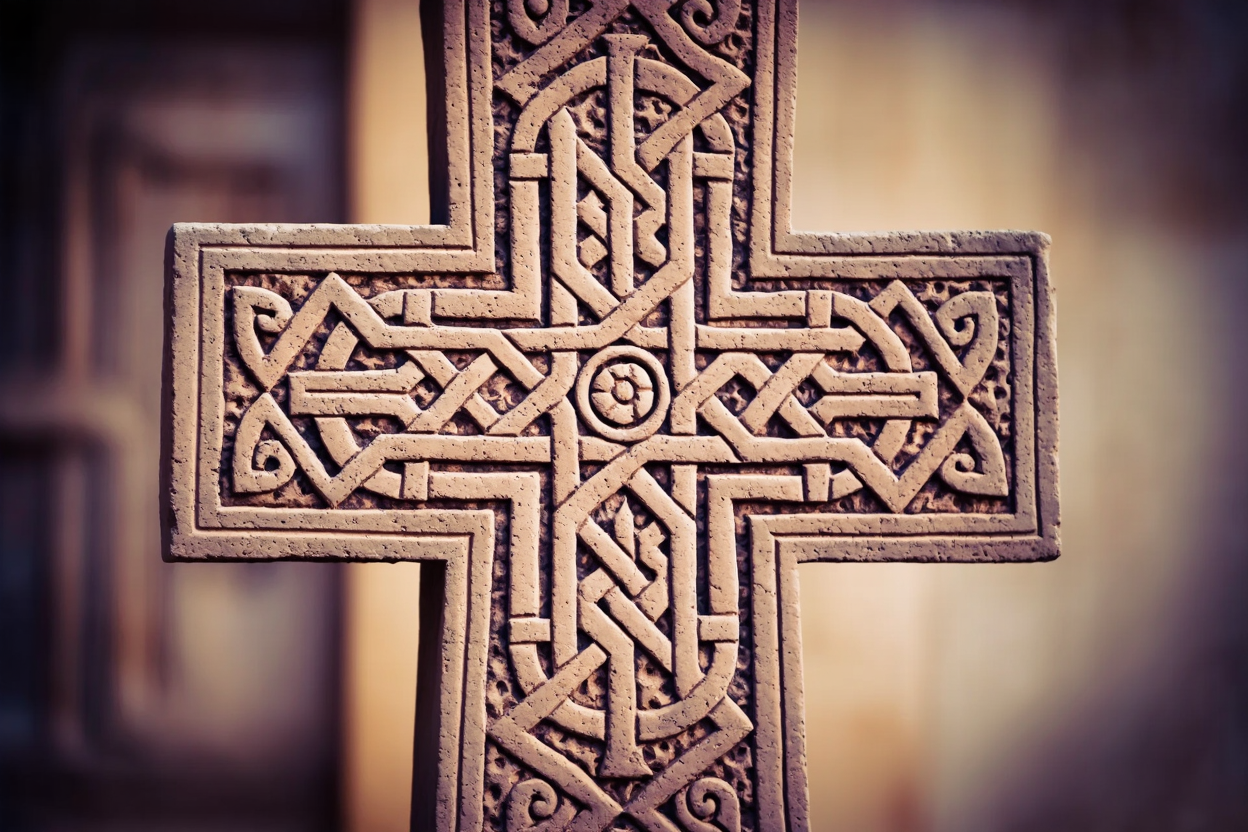
Geometry has become not only a mathematical knowledge but also a powerful means of artistic expression. The intricate patterns of Armenian khachkars (cross-stones) reveal our ancestors' deep knowledge of shapes and symmetry. The circles, stars, and eternity symbols present on khachkars are constructed with precise geometric calculations. Each line, each angle has its symbolic meaning and at the same time follows mathematical laws.
The 20th-century Dutch artist M.C. Escher took geometric art to a new level. In his works, the real and unreal merge, playing with our visual perception. Escher's "Infinity" and "Drawing Hands" demonstrate how mathematical precision can create a paradoxical reality.
Contemporary artists continue to explore the possibilities of geometry using digital technologies. They create dynamic, interactive works that change our perceptions of space and form. However, their work is based on the same mathematical principles that were used centuries ago.
The Mathematics of Color
Color theory is also based on mathematical patterns. Newton's discovery of the color spectrum showed that colors can be measured by wavelength. The modern RGB (Red, Green, Blue) system allows the creation of millions of colors by combining the numerical values of three primary colors. The Impressionists, without knowing these scientific foundations, instinctively used color contrast to create optical effects.
The Mathematical Foundations of Music
Pythagoras's discoveries showed that the harmony of sounds depends on the ratio of string lengths. Bach's music is an excellent example of the fusion of mathematics and art. His famous "Toccata and Fugue in D Minor" and many other fugues are constructed according to clear mathematical principles. In a fugue, one melodic theme is presented, then transformed and repeated at different pitches, following the rules of counterpoint. This regular structure, based on numerical relationships of intervals, creates a rich, multi-layered sound that is both expressive and emotional.
The Mathematics of Architecture
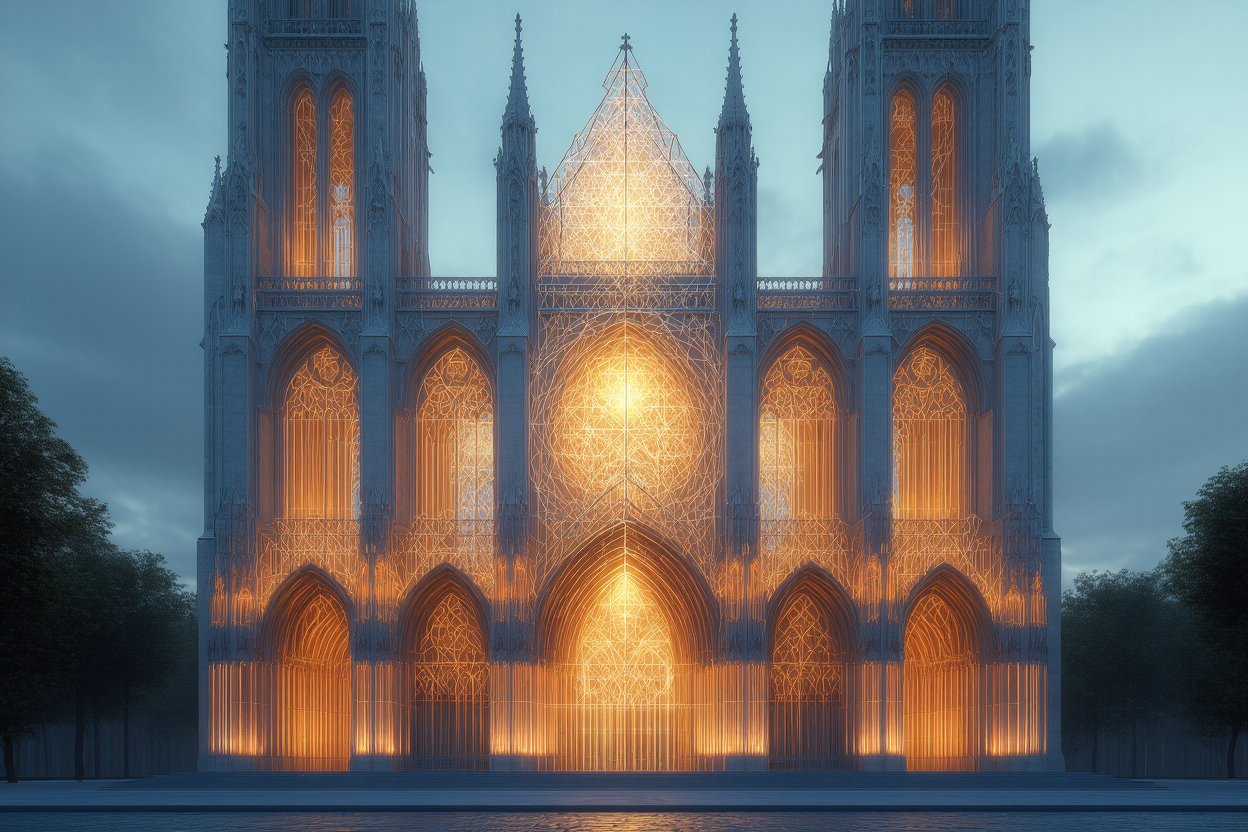
Architecture is perhaps the most vivid example of the symbiosis between art and mathematics. The high arches of Gothic cathedrals, the symmetrical facades of Renaissance palaces, the bold constructions of modernist buildings—all require complex mathematical calculations. Gaudí's Sagrada Familia is unique in that natural forms are transformed into geometric structures.
Art in the Digital Age
In contemporary art, mathematics has taken on a new role. Digital technologies allow for the creation of algorithmic art, where the computer, through mathematical formulas, becomes the artist's co-author. 3D modeling, animation, generative design—all are based on complex mathematical calculations. Fractal art, created by repeating simple mathematical formulas, produces surprisingly complex and beautiful images. NFT (Non-Fungible Token) art also often uses mathematical algorithms to generate unique digital creations.
Conclusion
However, mathematics in art is more than just a calculation tool. It helps understand the inner structure of the world and find beauty in order. Every artist, consciously or subconsciously, uses mathematical principles to create balance, symmetry, and rhythm. The synthesis of art and mathematics continues to give birth to new ideas and forms of expression.
The next time you stand in front of a work of art, try to find the hidden mathematics in it. You might discover that the world of numbers is just as beautiful as the world of colors. Mathematics and art together create a new language that unites logic and emotion, precision and creativity.
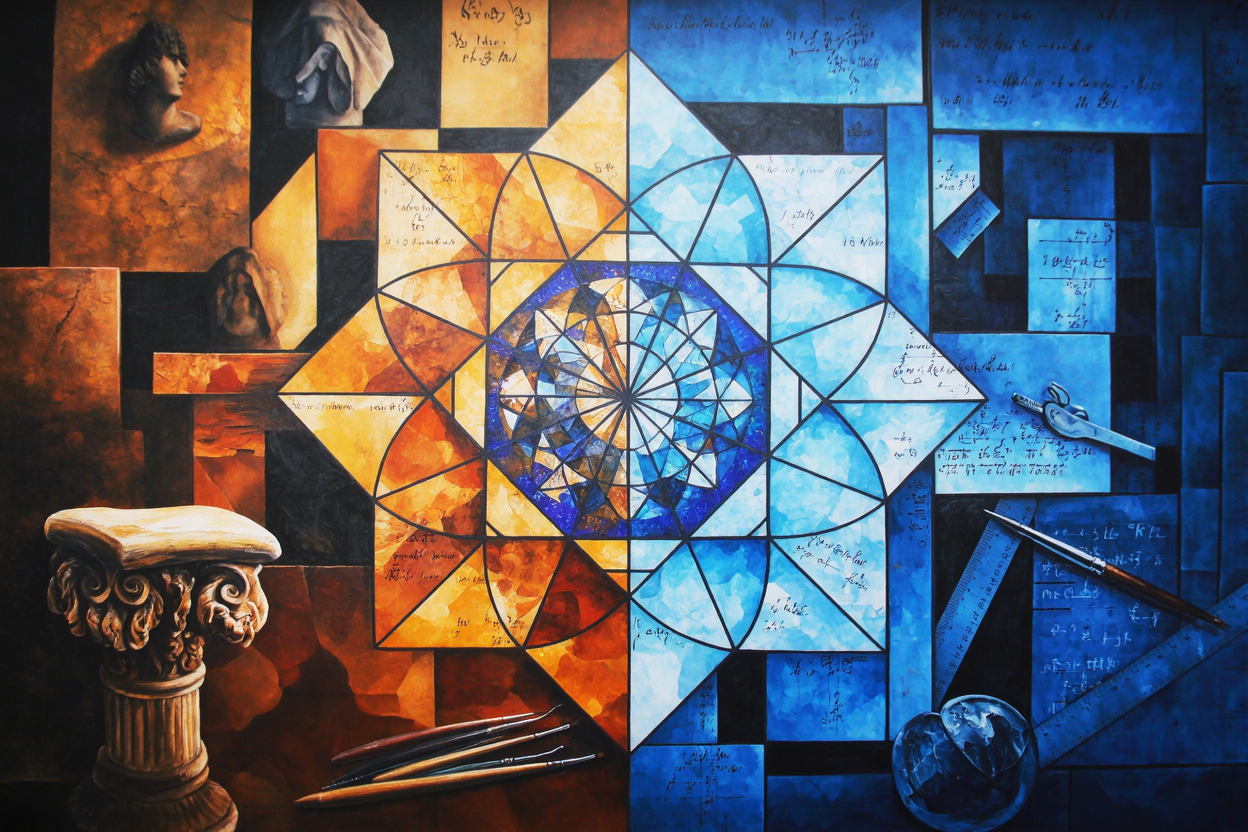
The main image of the article symbolizes the combination of mathematics and art
Author Gevorg Zadoyan.
Related materials
