The black fungus that can "absorb" radiation and restore Chernobyl
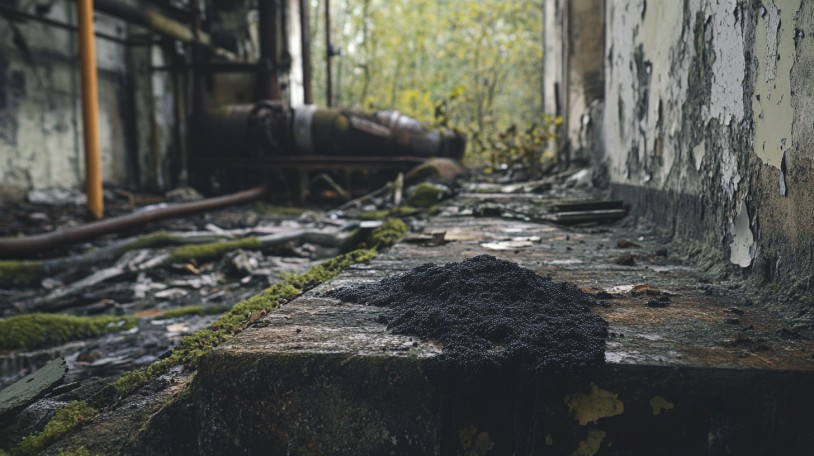
Scientists have discovered a unique black fungus in the ruins of Chernobyl called Cladosporium sphaerospermum, which not only survives in deadly gamma radiation conditions but also feeds on it. This organism actively grows toward the reactor core, absorbing radiation and converting it into an energy source. The fungus uses the melanin pigment to transform radiation into chemical energy, and research has shown that it actually grows faster in high radiation environments.
After the explosion of the No. 4 reactor of the Chernobyl Nuclear Power Plant near Pripyat, Ukraine on April 26, 1986, a 30-kilometer exclusion zone was created where human settlement is restricted. In the late 1980s, Ukrainian scientists discovered a black, mold-like fungus growing on the walls and in pools of radioactive water inside the damaged reactor. This fungus not only withstood high levels of radiation but also seemed to thrive because of them.
Cladosporium sphaerospermum belongs to a group of radiotrophic fungi that can capture and use ionizing radiation to drive metabolic processes. This phenomenon, called radiosynthesis, has opened new directions in biochemistry and radiation research. An article published in PLOS ONE in 2007 confirmed this energy production mechanism, showing that fungi grown in high-radiation environments grow faster than those in non-radioactive conditions.
The discovery of C. sphaerospermum in the Chernobyl Exclusion Zone has directed new attention to radiotrophic fungi, particularly for their potential role in bioremediation. Scientists are also researching applications of this fungus in space exploration. It has already been sent to the International Space Station to determine whether its radiation resistance could protect astronauts from cosmic radiation. Initial results indicate that this fungus could be used to develop radiation-resistant habitats or radiation-shielding food sources for astronauts.
C. sphaerospermum is also known for its hardiness. It can withstand low temperatures, high salt concentrations, and extreme acidity. Scientists are studying its adaptation mechanisms, which could be applied in biotechnology and agriculture. The study of this fungus may contribute to innovation in various fields and expand our understanding of the boundaries of life.
See the
source.

Related materials