The Scientific Explanation Behind the Expression "Crocodile Tears"
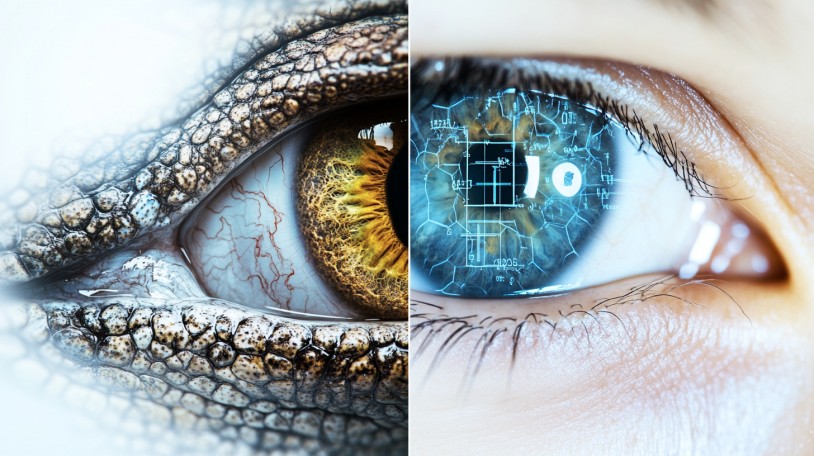
The expression "crocodile tears" is often associated with fake emotional displays. However, crocodiles do actually produce tears, and surprisingly, their tears are similar to human tears. Scientists have studied the tears of birds and reptiles, focusing on seven different species, including broad-snouted caimans (a type of crocodile). During the research, tears were collected from 65 animals, and it was discovered that despite the differences in tear-producing organs among mammals, birds, and reptiles, tears from all species have similar chemical compositions and electrolyte (sodium and chloride mixture) concentrations.
The study found that broad-snouted caimans, relatives of alligators, can keep their eyes open without blinking for up to two hours. In comparison, humans blink every 10-12 seconds. Blinking spreads tears across the eye's surface, which maintains moisture and stable vision.
Interestingly, the expression "crocodile tears," known as a symbol of fake human emotions and formal regret, has a scientific explanation. This expression originated from the peculiar habit of crocodiles seemingly "crying" while eating. When a crocodile consumes its prey, fluid resembling tears can often be seen flowing from its eyes. However, unlike human tears, which can result from emotional states, these crocodile tears are caused by a mechanical process. When a crocodile applies pressure while swallowing food, the pressure is also transferred to the tear glands, resulting in fluid secretion. This is purely a physiological reaction rather than an emotional expression. Humans, however, are the only ones who cry due to emotional reasons such as joy, sadness, grief, or pain.
See the source.
Based on views

Related materials