Tanzania's Lake Natron Turns Animals into Stone Statues
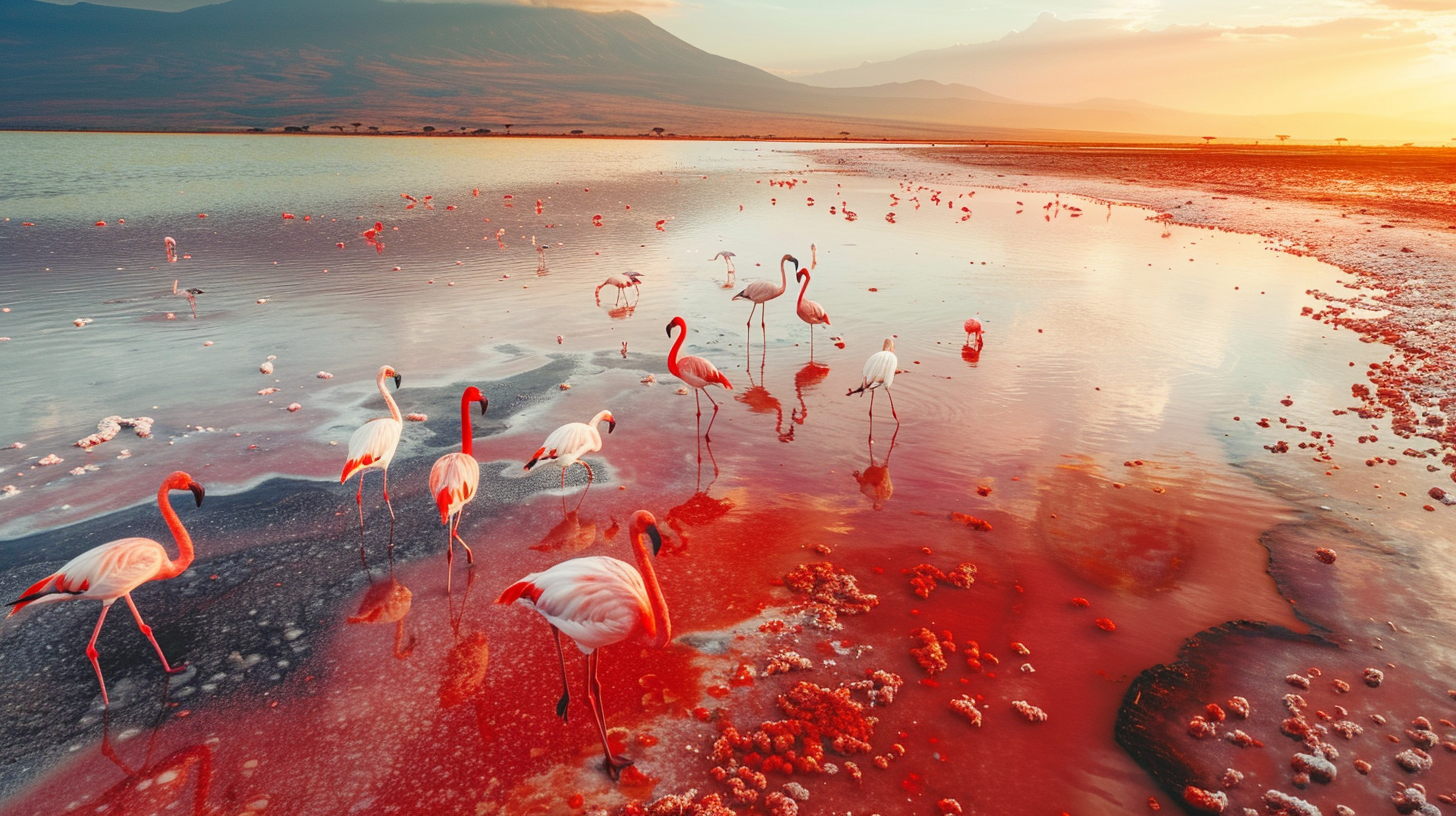
Lake Natron is located in northern Tanzania, near the Kenyan border. This salt lake is one of the world's most alkaline bodies of water, with a pH level of 10.5, comparable to ammonia. The lake is fed by hot springs rich in minerals, particularly sodium carbonate. These substances come from nearby volcanic ash deposits.
These extreme conditions are deadly for almost all animals. Birds often crash into the lake's highly reflective surface because they mistake it for empty space. After death, their bodies soak in the mineral-rich water. The high alkalinity preserves the carcasses and hardens them. Thus, they come to resemble stone statues.
During dry seasons, the lake's temperature can reach 60 degrees Celsius. However, in these harsh conditions, lesser flamingos not only survive but also breed. They build nests on salt islands where they are safe from predator attacks. Flamingos' tough legs can withstand the lake's caustic waters, and they feed on cyanobacteria.
The lake's characteristic red and orange colors come from halophilic microorganisms. These salt-loving bacteria produce red pigments under extreme saline conditions. As water evaporates, salt concentration increases, and these microbes multiply en masse, coloring the water bright red. Scientists study this lake to understand the extreme conditions on our planet.
See the source.

Related materials