The 3,000-Year-Old Honey Discovered in Egyptian Tombs Has Retained Its Edibility
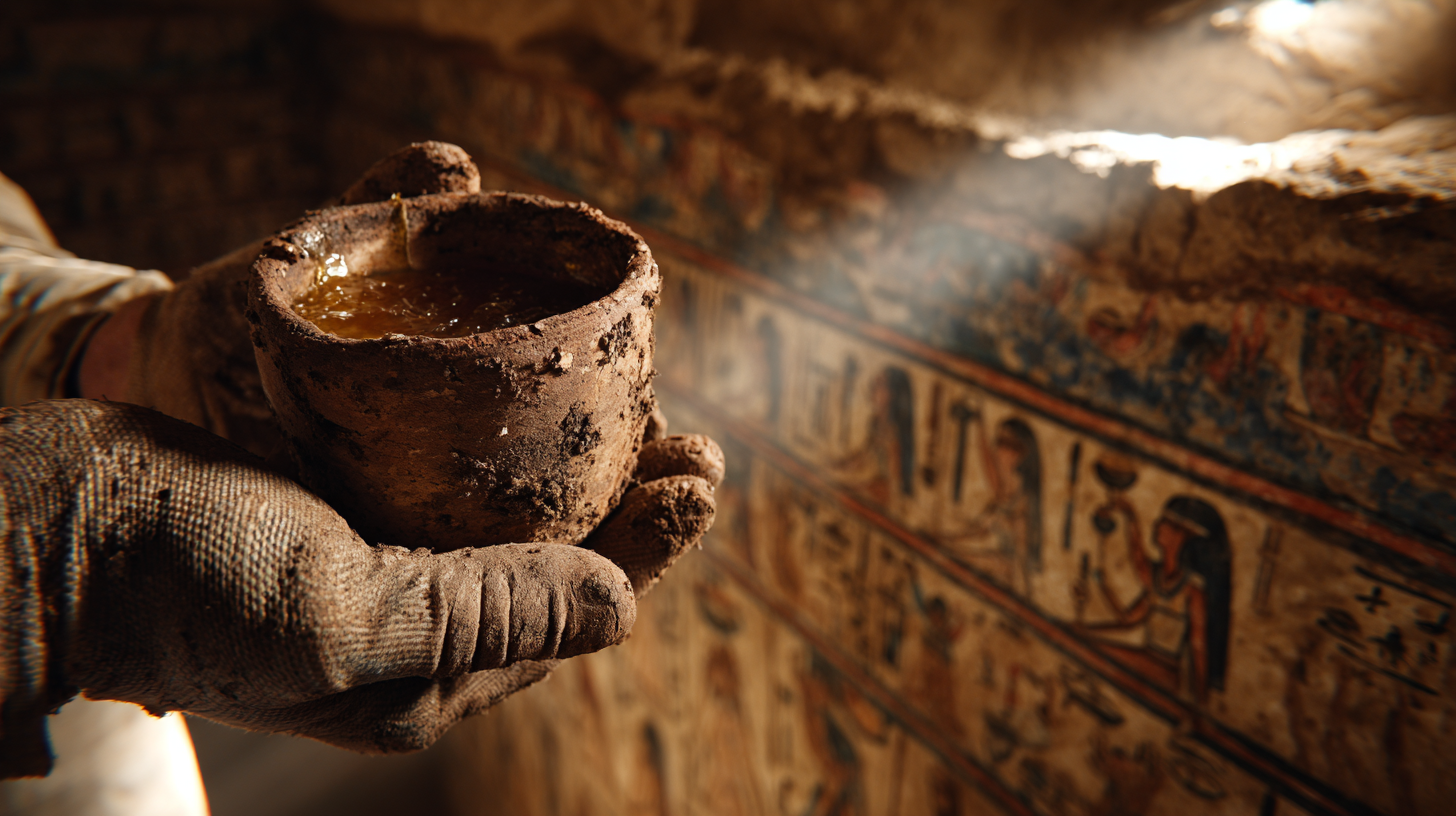
Archaeologists have discovered 3,000-year-old honey in Egyptian tombs that was still perfectly edible. This remarkable find highlights honey's unique property of having an almost indefinite shelf life. The honey, which remained in sealed conditions for millennia, retained its original quality, serving as a prime example of the exceptional interaction between nature and chemistry.
The extraordinary longevity of honey is due to its specific physicochemical properties. It is characterized by low water activity, a high concentration of sugars, and an acidic pH (approximately 3.2-4.5). These conditions inhibit the growth and proliferation of microorganisms, including bacteria and fungi. Additionally, during honey production, bees add the enzyme glucose oxidase, which produces hydrogen peroxide through the oxidation of glucose. This compound is known for its antimicrobial properties, further contributing to honey's preservation.
Honey's preservation is also ensured in the post-harvest phase. Hermetic sealing is crucial to prevent the absorption of moisture from the atmosphere, as honey's sugars (primarily fructose and glucose) are hygroscopic. While crystallization may occur over time, it is essentially the separation of glucose from the solution and does not affect the honey's quality or nutritional value. This is merely a cosmetic change and can be reversed with gentle heating.
The unique composition and antimicrobial properties of honey have made it a vital component in both ancient and modern medicine. Its thick consistency and healing attributes have been used for thousands of years to treat wounds and prevent infections. Thus, honey continues to be not just a food but also a powerful natural remedy that withstands the test of time.
See the source.

Related materials