AI Takes Flight: The Future of Aerospace Engineering
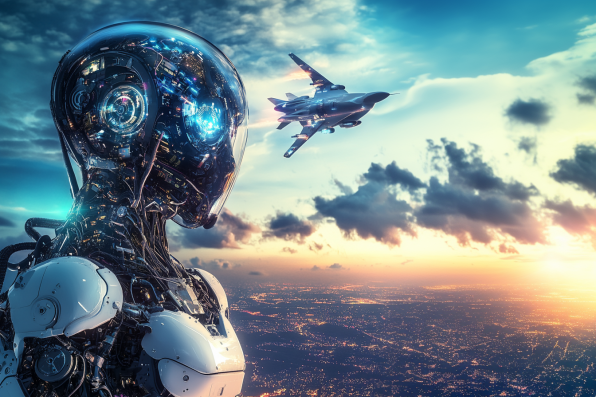
Artificial intelligence (AI) is revolutionizing the aerospace industry, enabling engineers to design, test, and optimize aircraft and spacecraft more efficiently than ever before. From commercial airliners to autonomous drones and interplanetary vehicles, AI is shaping the future of flight. In this article we will explore some key areas where AI is making a significant impact:
1. Generative Design
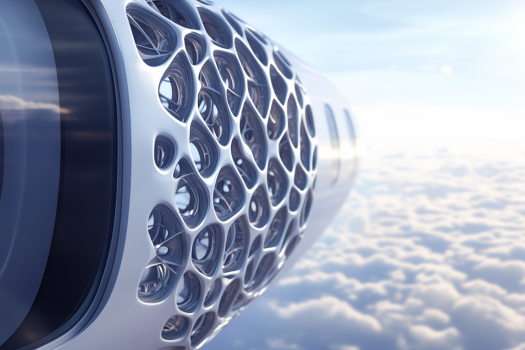
Airbus used generative design to reimagine the partition wall in its A320 aircraft. The AI-generated design was 45% lighter than the original while maintaining the required strength, leading to significant fuel savings over the aircraft's lifetime. This new design not only was lighter but also had a bionic structure resembling forms found in nature. The AI considered multiple factors, including strength, weight, and manufacturability, creating a structure that was impossible to conceive using traditional methods. This innovation reduced the overall weight of the aircraft by about 30 kg, resulting in substantial fuel savings and reduced carbon emissions on an annual basis.
2. Aerodynamics Optimization
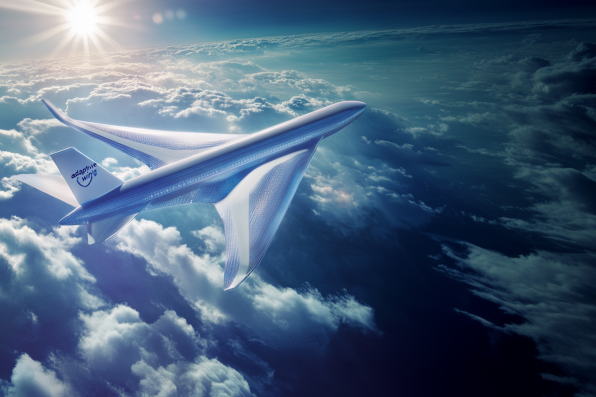
NASA's research into AI-driven aerodynamics has led to the development of novel wing designs that can change shape during flight, potentially reducing fuel consumption by up to 10%. This technology, called "adaptive wing," uses AI algorithms to continuously adjust the wing shape during different phases of flight to optimize aerodynamics. The system analyzes real-time data, including air speed, density, and temperature, and adjusts the wing shape to minimize air resistance. This not only improves fuel efficiency but can also reduce noise and increase overall flight stability.
3. Materials Science
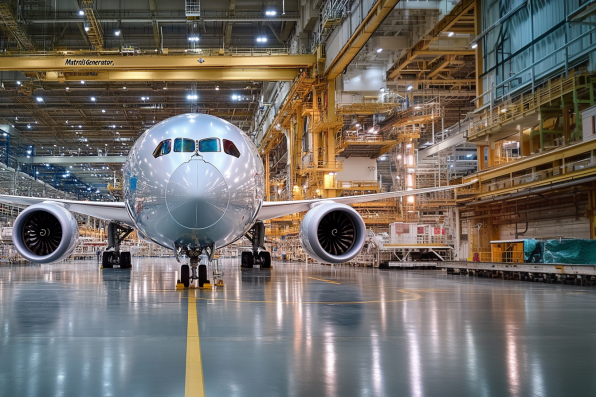
Boeing is using machine learning algorithms to predict the properties of new alloys, significantly reducing the time and cost involved in developing advanced materials for aircraft construction. Their AI system, called "Materials Generator," can simulate millions of possible alloy compositions and predict their properties based on atomic structure. This process, which previously took decades, can now be accomplished in months. For instance, Boeing developed a new aluminum alloy that is 20% stronger than previous best options while maintaining the same lightness. This new material is already being used in aircraft structural elements, resulting in lighter and more fuel-efficient aircraft.
4. Autonomous Systems
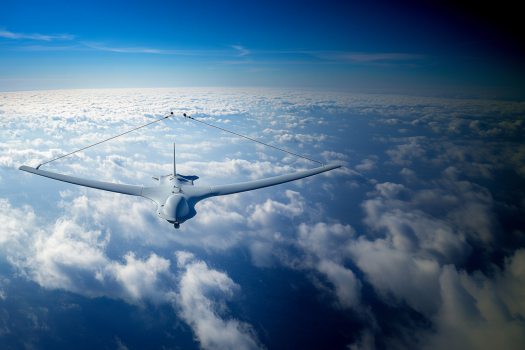
The Boeing MQ-25 Stingray, an autonomous aerial refueling drone, uses AI to safely maneuver near other aircraft and perform precise refueling operations. The MQ-25's AI system incorporates deep learning neural networks that process data from multiple sensors, including radars, electro-optical and infrared cameras. It can detect and track multiple aircraft, calculate optimal flight paths, and perform complex refueling maneuvers even in adverse weather conditions. The system also has self-learning capabilities that allow it to improve its performance after each mission. This technology significantly expands the capabilities of military air forces, allowing for longer and more distant missions.
5. Predictive Maintenance
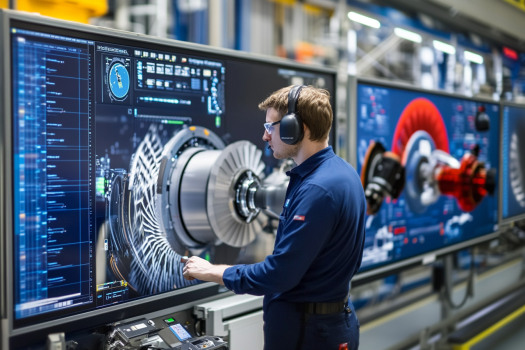
Rolls-Royce's intelligent engine health monitoring system uses machine learning to analyze data from thousands of sensors, predicting maintenance needs and optimizing engine performance. This system, called "IntelligentEngine," uses big data analytics and AI to monitor the condition of every part of the engine in real-time. It can detect even minor anomalies and predict potential issues weeks or even months in advance. For instance, the system can detect a slight vibration in a turbine blade and predict when it might lead to a serious problem. This allows airlines to plan maintenance in advance, minimizing downtime and preventing unexpected failures. Rolls-Royce reports that this system has reduced unexpected engine shutdowns by 40% and cut maintenance costs by 30%.
6. Space Exploration
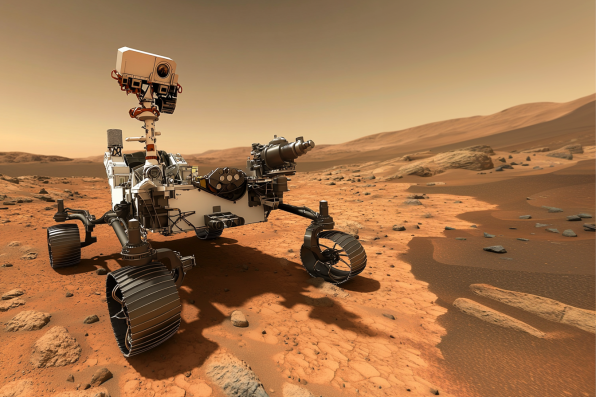
NASA's Mars 2020 mission featured the Perseverance rover, which used AI to navigate the Martian terrain and select promising rock samples for analysis autonomously. Perseverance's AI system, called AEGIS (Autonomous Exploration for Gathering Increased Science), uses computer vision and machine learning algorithms to analyze its surroundings. It can independently determine which rocks are of scientific interest based on their shape, color, and texture. The system also uses AI to plan safe routes through difficult terrain, avoiding hazardous areas. This autonomy allows the rover to continue its mission even when communication with Earth is impossible. AEGIS has already identified several interesting geological features that may contain traces of ancient microbial life.
7. Virtual Testing and Simulation
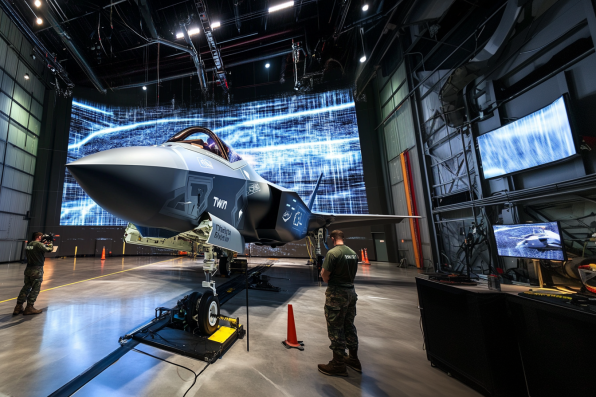
Lockheed Martin's AI-powered "Digital Twin" technology creates virtual replicas of aircraft, allowing engineers to test and optimize designs in a simulated environment before building physical prototypes. This technology was used in the development of the F-35 Lightning II fighter jet. The Digital Twin system creates a complete virtual model of the aircraft, including all mechanical, electrical, and software systems. AI algorithms can simulate thousands of flight scenarios and stress tests, identifying potential issues that might have been overlooked with traditional testing methods. For instance, the system detected a potential weakness in the F-35's wing structure that would only occur under certain extreme flight conditions. This discovery allowed engineers to reinforce the structure before real flight tests. Lockheed Martin reports that the Digital Twin technology reduced F-35 development time by 25% and cut costs by approximately 15%.
Conclusion
As AI continues to advance, its role in aerospace engineering will only grow more significant. From conceptual design to manufacturing and operation, AI is helping create safer, more efficient, and more innovative aircraft and spacecraft. The fusion of human creativity with AI's computational power is ushering in a new era of aerospace technology, promising exciting developments in the years to come.
Related materials