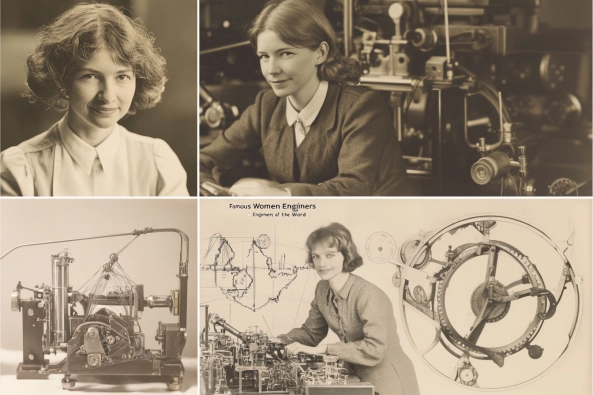
Women Pioneers in Engineering History: Shaping the Future
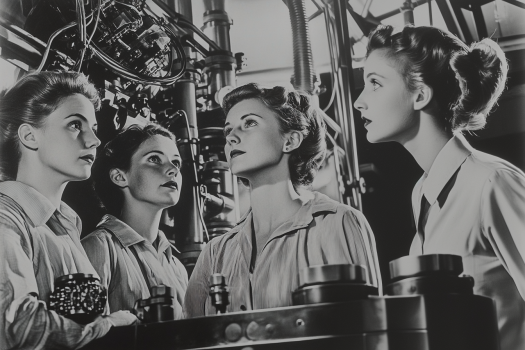
Introduction
Throughout history, women have made significant contributions to the field of engineering, often in the face of considerable social and institutional barriers. These pioneering women not only advanced technology and science but also paved the way for future generations of female engineers. This article delves deep into the lives and achievements of some remarkable women who have left an indelible mark on engineering history.
Notable Women Pioneers in Engineering
Edith Clarke (1883-1959)
Edith Clarke was a trailblazer in electrical engineering, becoming the first woman to earn an electrical engineering degree from MIT and the first female professor of electrical engineering in the United States.
Early Life and Education.
Born in Maryland in 1883, Clarke lost her parents at a young age. She used her inheritance to study mathematics and astronomy at Vassar College. After graduation, she taught mathematics for several years before pursuing engineering.
Professional Career.
In 1918, Clarke became the first woman to earn an M.S. in electrical engineering from MIT.
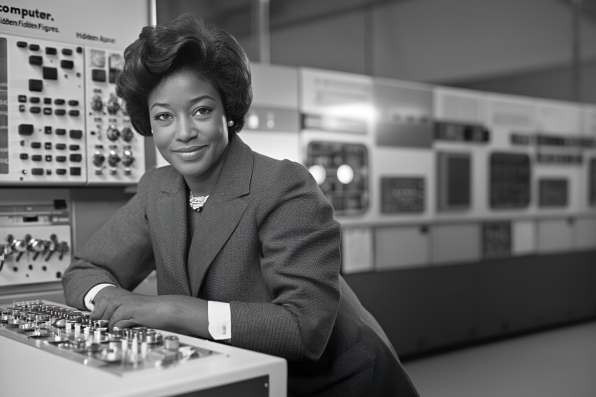
She worked at General Electric (GE) for many years, initially as a "computer," performing complex calculations. In 1921, she filed a patent for the Clarke Calculator, a graphical device that solved equations involving electric current, voltage, and impedance in power transmission lines.
Clarke became GE's first professional female electrical engineer in 1922.
Key Achievements.
Invented the Clarke Calculator, revolutionizing the analysis of power systems.
Authored the influential textbook "Circuit Analysis of A-C Power Systems" in 1943, which became a standard in the field.
In 1926, she became the first woman to present a paper at the American Institute of Electrical Engineers (now IEEE).
Joined the faculty of the University of Texas at Austin in 1947, becoming the first female professor of electrical engineering in the country.
Legacy.
Clarke's work laid the foundation for modern power system analysis. Her methods for simplifying calculations in power system analysis are still used today. In 2015, she was posthumously inducted into the National Inventors Hall of Fame.
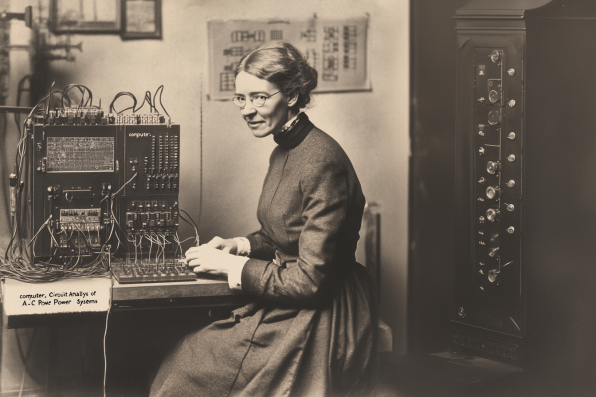
Hedy Lamarr (1914-2000)
Hedy Lamarr was an Austrian-American actress and inventor whose work in frequency-hopping spread spectrum technology laid the groundwork for modern wireless communication.
Early Life.
Born Hedwig Eva Maria Kiesler in Vienna, Austria, Lamarr showed an early interest in technology and invention. She began her acting career in Europe before moving to Hollywood in the late 1930s.
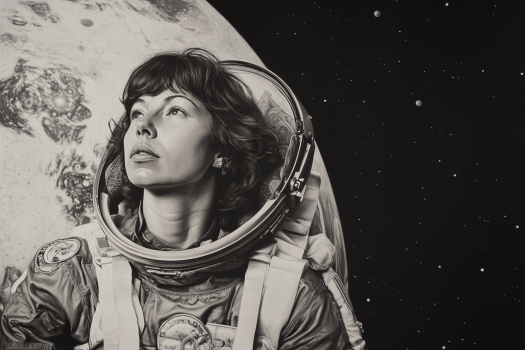
Invention and Engineering Contributions. During World War II, Lamarr learned that radio-controlled torpedoes could be easily jammed and set off course. Collaborating with composer George Antheil, she developed a frequency-hopping system that could prevent torpedo signals from being intercepted. In 1942, they were granted U.S. Patent 2,292,387 for their "Secret Communication System." Key Achievements. Co-invented the frequency-hopping spread spectrum technology. Her work contributed significantly to the development of secure military communications and later to civilian applications like GPS, Wi-Fi, and Bluetooth. Received the Electronic Frontier Foundation Pioneer Award in 1997. Posthumously inducted into the National Inventors Hall of Fame in 2014. Legacy. While Lamarr was primarily known for her acting career during her lifetime, her technological contributions have gained recognition in recent decades. Her work demonstrates the potential for innovative thinking across disciplines. Mary Jackson (1921-2005) Mary Jackson was NASA's first African American female engineer, whose work in aeronautics and computational fluid dynamics contributed significantly to the success of the U.S. space program. Early Life and Education. Born in Hampton, Virginia, Jackson excelled in school and earned bachelor's degrees in mathematics and physical science from Hampton Institute in 1942. Career at NASA. Jackson began her career at NASA's predecessor, NACA, in 1951 as a research mathematician or "computer." She worked under Dorothy Vaughan in the segregated West Area Computing section. In 1953, she began working for engineer Kazimierz Czarnecki, who encouraged her to pursue engineering training. To take graduate-level math and physics courses, Jackson had to petition the City of Hampton to allow her to attend classes with white students. In 1958, she completed the courses and was promoted, becoming NASA's first black female engineer. Key Achievements. Authored or co-authored numerous research reports, particularly on the behavior of the boundary layer of air around airplanes. Worked in the Theoretical Aerodynamics Branch of the Subsonic-Transonic Aerodynamics Division at Langley. Later in her career, Jackson worked to improve the hiring and promotion of women in NASA's science, engineering, and mathematics careers. Legacy. Jackson's story, along with those of other African American women at NASA, was popularized by the book and film "Hidden Figures." In 2019, NASA renamed its headquarters building in Washington, D.C., in her honor. Ellen Ochoa (1958-present) Ellen Ochoa is an American engineer, former astronaut, and former director of NASA's Johnson Space Center. She became the first Hispanic woman to go to space when she served on a nine-day mission aboard the Space Shuttle Discovery in 1993. Early Life and Education. Born in California, Ochoa earned a bachelor's degree in physics from San Diego State University and a master's and doctorate in electrical engineering from Stanford University. NASA Career. Selected as an astronaut in 1990 after working at NASA Ames Research Center. Flew on four space missions between 1993 and 2002, logging nearly 1,000 hours in space. Served as payload commander, flight engineer, and mission specialist on various missions. Engineering Contributions. Before becoming an astronaut, Ochoa was a research engineer and inventor. Co-inventor on three patents for optical systems: 1. An optical system for detecting defects in a repeating pattern 2. A method for noise removal in images 3. A method for object recognition Leadership Roles: Served as Director of NASA's Johnson Space Center from 2013 to 2018, becoming the first Hispanic and second female director. As director, she oversaw programs including the development of NASA's Orion spacecraft and Commercial Crew Program. Key Achievements. First Hispanic woman in space Logged nearly 1,000 hours in space across four missions Awarded NASA's Distinguished Service Medal and the Presidential Distinguished Rank Award Legacy. Ochoa has been a strong advocate for women and minorities in STEM fields. Several schools have been named in her honor, and she continues to inspire future generations of engineers and scientists. Conclusion These women, among many others, have made invaluable contributions to engineering and continue to inspire future generations. Their perseverance in the face of adversity and their groundbreaking achievements have not only advanced technology but also helped to break down barriers for women in STEM fields. Edith Clarke's work in power systems, Hedy Lamarr's frequency-hopping technology, Mary Jackson's aeronautics research, and Ellen Ochoa's contributions to space exploration and NASA leadership all demonstrate the crucial role women have played in shaping modern engineering. As we celebrate their accomplishments, it's crucial to continue supporting and encouraging diversity in engineering to foster innovation and progress. These pioneers have shown that talent and ingenuity know no gender or racial boundaries, and their legacies continue to inspire and empower future generations of engineers. The main image of the article symbolizes working women standing around an engine room.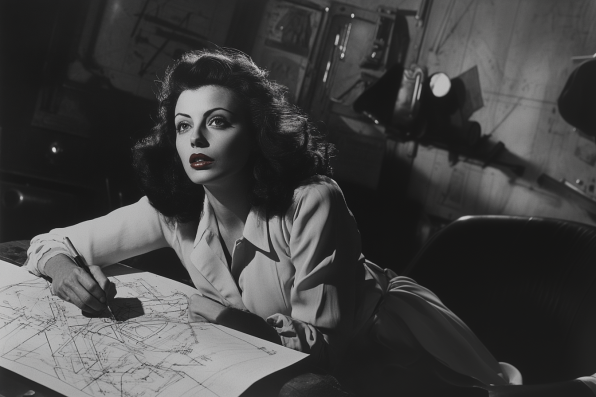
Related materials