Women in the History of Engineering: Shaping the Future (Article №2)
STEMNEWS.am continues its special project "Famous Female Engineers of the World". This is the second article in the series, aimed at introducing readers to innovative women in the field of engineering.
Throughout the history of engineering, numerous women have left their indelible mark, overcoming social and professional obstacles. This article presents three notable women engineers who, with their innovative thinking and unwavering determination, have made significant contributions to the development of the field. Their stories demonstrate the crucial role of women in STEM fields and inspire future generations.
Introduction
Throughout the history of engineering, numerous women have left their indelible mark, overcoming social and professional obstacles. This article presents three notable women engineers who, with their innovative thinking and unwavering determination, have made significant contributions to the development of the field.
Notable Women Engineers
Grace Hopper (1906-1992)
Grace Hopper was an American computer scientist and United States Navy rear admiral. She is known as one of the pioneers of modern programming languages and a key advocate for the creation of COBOL.
Life and Education:
Born on December 9, 1906, in New York, Hopper received her bachelor's and master's degrees in mathematics and physics from Vassar College, and in 1934, she earned a Ph.D. in mathematics from Yale University.
Professional Career:
In 1943, Hopper joined the U.S. Naval Reserve and was assigned to the programming team for the Harvard Mark I computer. Here, she wrote the first manual on computer programming.
In 1949, Hopper joined the Eckert–Mauchly Computer Corporation, where she worked on UNIVAC I, the first commercial electronic computer. There, she developed the A-0 system, the first compiler.
Key Achievements:
• Developed the first compiler, the A-0 system
• Played a crucial role in the development of the COBOL programming language
• Coined the term "debugging" in programming
• Advocated for machine-independent programming languages
• Developed FLOW-MATIC, the first English-like data processing language
Legacy:
Hopper's work revolutionized computer programming, making it more accessible to non-mathematicians. Her efforts in creating COBOL significantly impacted business programming.
In 1991, she was awarded the National Medal of Technology. The USS Hopper (DDG-70) warship is named after her, and Google dedicated a doodle to her in 2013 in honor of her 107th birthday.

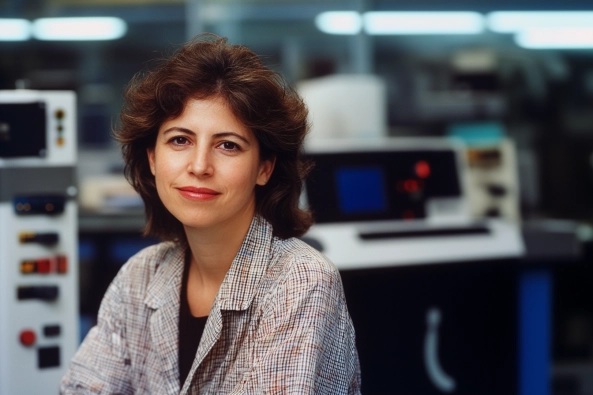
Limor Fix (born 1961)
Limor Fix is an Israeli computer engineer known for leading the development of the Intel 80386 processor. She was also Intel's first female vice president.
Life and Education:
Born on June 18, 1961, in Haifa, Israel, Fix received her bachelor's degree in electrical engineering from the Technion-Israel Institute of Technology.
Professional Career:
In 1979, at the age of 18, Fix began working at Intel as an engineer. She quickly advanced and became the leader of the Intel 80386 processor design team.
In 1994, she became the chief engineer of the Intel Israel Development Center, and in 2001, she became Intel's vice president.
Key Achievements:
• Led the development of the Intel 80386 processor, which revolutionized personal computing
• Played a leading role in the development of Pentium processors
• Became Intel's first female vice president
• Led Intel's Israel branch, which became one of the company's most important research and development centers
Legacy:
Fix's work at Intel has had a significant impact on the development of personal computers. She is not only a technical leader but also serves as an example for women in achieving high positions in the technology sector.
In 2008, Fix was honored with lighting the torch at Israel's Independence Day celebrations in recognition of her contributions to the technology sector.
Stephanie Kwolek
(1923-2014)
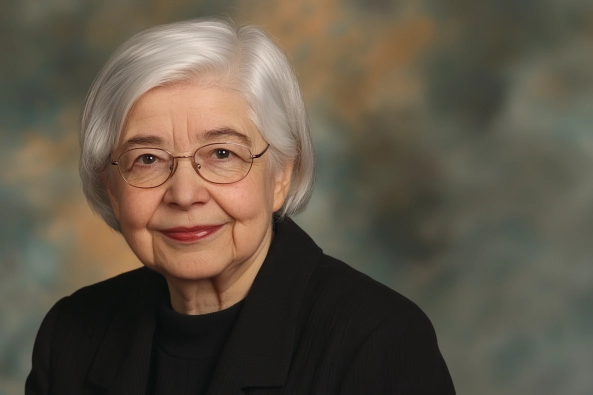
Stephanie Kwolek was an American chemist and engineer known for inventing Kevlar, an ultra-strong synthetic fiber.
Life and Education:
Born on July 31, 1923, in New Kensington, Pennsylvania, Kwolek received her bachelor's degree in chemistry from Margaret Morrison Carnegie College (now part of Carnegie Mellon University).
Professional Career:
In 1946, Kwolek began working at DuPont as a research chemist. She worked in the field of polymer chemistry and invented Kevlar in 1965.
Key Achievements:
• Invented Kevlar, a synthetic fiber five times stronger than steel of the same weight
• Received more than 17 U.S. patents
• Developed Lycra (spandex) elastic fiber
Legacy:
Kwolek's invention, Kevlar, revolutionized numerous industries. It is used in the production of bulletproof vests, construction materials, sports equipment, and many other products.
In 1995, Kwolek became the fourth woman member of the National Inventors Hall of Fame. In 1996, she received the National Medal of Technology.
Conclusion
Grace Hopper, Limor Fix, and Stephanie Kwolek have demonstrated that women can be innovators and leaders in various fields of engineering. Their achievements have not only advanced technology but also inspired the next generation of women engineers. The stories of these women show that talent, dedication, and innovation know no gender boundaries, and that diversity can lead to revolutionary progress in science and technology.
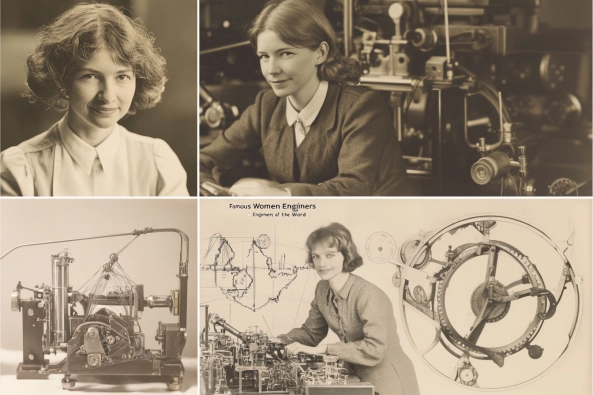
The main image of the article symbolizes vintage photo collage of iconic women in engineering, such as "Hedy Lamarr" and the early watchmaker Harriet Quimby.

Related materials