Smart Luggage: Technology at the Heart of Travel

Throughout human history, travel has always been a source of curiosity, discovery, and self-realization. Today, in the 21st century, we are witnessing a new era of travel where technology and artificial intelligence (AI) are transforming our experience.
Imagine a world where your luggage is not only tagged but also "smart." A world where your next adventure is shaped by algorithms that understand your preferences better than you do yourself. This world is already becoming a reality, and it is changing the essence of travel.
The Evolution of Luggage Tags:
Luggage tags, those small but important pieces of paper that accompany our belongings around the world, are undergoing a revolutionary transformation. Their story begins with simple paper tags, which often became travel souvenirs if one managed to keep them intact.
Today, we see the introduction of RFID (Radio-Frequency Identification) technology, which is changing the rules of the game. RFID technology, based on data transmission via radio frequency, is becoming the secret weapon of airlines and airports in the fight against luggage loss. These tiny chips, embedded in luggage tags, contain important information about the passenger and their luggage, which can be read by special devices. Delta Air Lines' experience is a prime example of RFID's potential. In 2016, Delta implemented RFID technology across its entire system, and the results were astounding. The airline managed to achieve 99.9% accuracy in baggage tracking. This means that the problem of lost luggage, which has long been a source of headache for travelers, has been virtually eliminated.
How does RFID work?
Imagine your suitcase having its own "digital passport." This "passport" contains all the important data about your journey, from your name to your flight details. RFID readers placed at various points in the airport "read" this information without the need for physical contact. This allows airlines to track luggage movement in real-time, reducing the likelihood of errors and losses. The benefits of RFID are not limited to baggage tracking. This technology also speeds up the baggage handling process, reduces waiting times, and improves the overall passenger experience. For example, thanks to RFID, airlines can more quickly determine whether all suitcases are loaded onto the aircraft, which reduces delays. But the story doesn't end here.
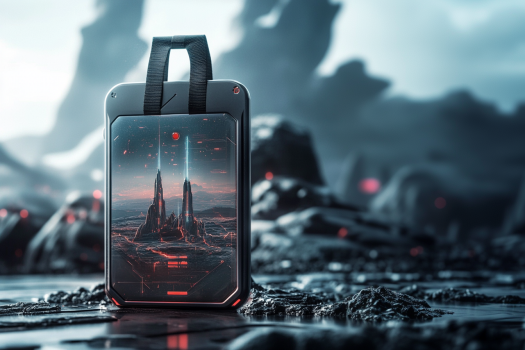
The next step in the development of electronic tags, for example, was taken by Aegean Airlines in 2019 when they introduced permanent electronic bag tags in collaboration with BAGTAG company. This innovative system allows passengers to check in their luggage from home using a mobile app.
Imagine a tag that can be updated via your smartphone, displaying your entire travel route. Aegean's electronic tags not only reduce paper usage but also speed up the baggage check-in process at the airport. Passengers can simply approach the baggage drop-off point and hand over their suitcases without the need for additional tagging. This is not just convenience, but also a new level of travel personalization and sustainability.
AI: The Traveler's Invisible Companion
Artificial intelligence has become an inseparable companion of the traveler - hidden, but omnipresent. It starts working even before we pack our suitcases.
Personalized Recommendations: AI algorithms analyze our previous trips, searches, and even social media activity to suggest destinations and experiences that seem tailor-made for us. Booking.com's experience shows that the application of AI can lead to a 50% increase in bookings. This is not just a statistic, but proof that technology can truly understand our desires.
Virtual Assistants: Imagine a world where your questions are answered 24/7 in multiple languages. KLM's BlueBot is an example of this reality. It not only answers questions but also helps with bookings, becoming your personal travel agent without the limitations of human factors.
Baggage Tracking: SITA's data shows that the application of AI has reduced mishandled baggage by 47%. This is not just a number, but time and nerves saved for thousands of travelers. Imagine your luggage not only traveling with you but also "thinking" with you.
Price Prediction: Kayak's Price Forecast tool uses machine learning to predict flight prices with 95% accuracy. This makes travel not only convenient but also affordable, allowing us to find the best deals at the right time.
New Level of Security: AI-powered scanners at London's Heathrow Airport represent a new era of security checks. Imagine going through a security check without having to take off your coat or remove your laptop from your bag. This is not just convenience, but also a new standard of security and efficiency.

The Future of Travel․
All these innovations are leading us to a world where travel is becoming more personalized, efficient, and secure than ever before. However, AI and innovative technologies do not replace the human experience, but rather expand and enrich it. They allow us to spend more time enjoying our travels and less time worrying about logistical details. But while technology continues to amaze us with its capabilities, we must remember that the true wonder of travel lies in what we see with our eyes, touch with our hands, and feel with our hearts.


Related materials