Your Face is Your Passport: Revolutionizng the Airports
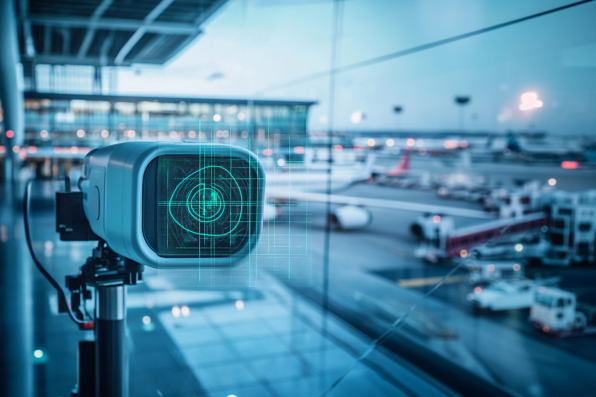
In an era where efficiency and security are paramount, airports worldwide are embracing biometric technology to transform the travel experience. This cutting-edge innovation is reshaping how we navigate airports, from check-in to boarding, making the process faster, more secure, and increasingly contactless.
What is Biometric Authentication Technology?
Biometric authentication technology uses unique physical or behavioral characteristics to identify individuals. In airport settings, this typically involves:
Facial recognition
Fingerprint scanning
Iris recognition
Voice recognition (less common, but growing in use)
These biometric identifiers are difficult to fake, providing a higher level of security than traditional identification methods.
Implementation in Airports
According to the International Air Transport Association (IATA), as of 2023, over 75% of global passengers have experienced some form of biometric technology during their air travel․ This rapid adoption is driven by both security concerns and the need for more efficient passenger processing.
Security Enhancements
Biometric technology significantly improves airport security by:
Reducing identity fraud: Biometric data is harder to forge than traditional identification documents.
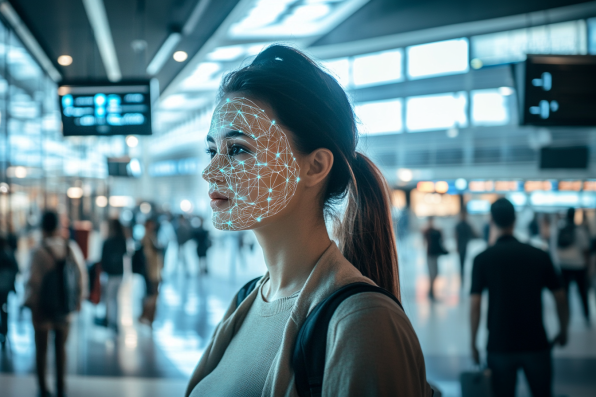
Enabling real-time watchlist checks: Facial recognition can quickly compare passenger images against security databases.
Enhancing access control: Biometric verification ensures only authorized personnel can access restricted areas.
Dubai International Airport
Dubai International Airport has implemented a biometric "smart tunnel" that uses facial recognition technology to verify passengers' identities. Travelers simply walk through the tunnel, and within 15 seconds, they are cleared for entry or exit, eliminating the need for human-checked stamp procedures․

Streamlined Check-in and Boarding
Biometric technology is also revolutionizing the passenger experience:
Faster processing: Delta AirLines reported that facial recognition boarding can save an average of two seconds per passenger, potentially saving nine minutes on a wide-body aircraft․
Contactless travel: In the wake of the COVID-19 pandemic, contactless biometric solutions have become increasingly important.
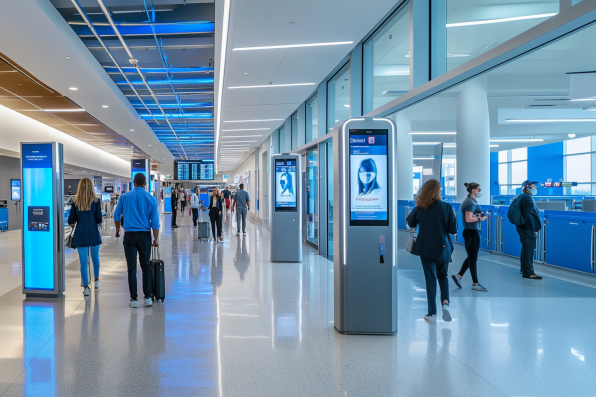
Self-service options: Biometric kiosks allow passengers to check in, drop bags, and board planes with minimal staff interaction.
Baggage Handling and Tracking
Biometrics are not just for passenger identification. Some airports are using the technology to streamline baggage handling:
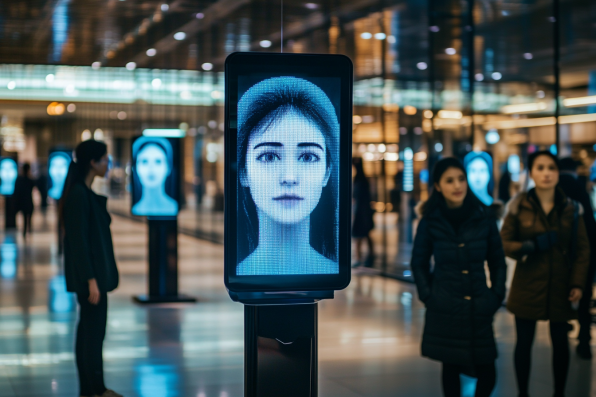
Biometric bag tags: These electronic tags can be updated with flight information and tracked throughout the journey. Facial recognition for bag drop: Passengers' faces are linked to their luggage, reducing the risk of lost bags. Delta's Biometric Bag Drop Delta AirLines has introduced a biometric bag drop system at several U.S. airports. Passengers scan their face at a kiosk, which then matches their identity to their checked bag, streamlining the process and reducing waiting times․ Privacy Concerns and Regulations While biometric technology offers numerous benefits, it also raises privacy concerns. To address these, various regulations have been implemented: GDPR in the European Union: Requires explicit consent for collecting and processing biometric data. Biometrics Privacy Laws: Some U.S. states, like Illinois, have specific laws governing the collection and use of biometric data. Addressing Public Concerns Airports and airlines are taking steps to address privacy concerns: Data encryption: Ensuring that biometric data is securely stored and transmitted. Opt-out options: Many airports offer alternative screening methods for passengers uncomfortable with biometric technology. Transparency: Clear communication about how biometric data is collected, used, and stored. Future Developments The future of biometric technology in airports looks promising: Integration with blockchain: To enhance data security and privacy. Expansion to other touchpoints: Including retail and lounges within airports. Biometric tokens: Allow passengers to use a single biometric identifier throughout their journey. Emerging Technologies Behavioral authentication: Analyzing patterns in a person's interactions with devices to confirm identity. Multimodal authentication: Combining multiple biometric identifiers for even greater accuracy. AI-enhanced authentication: Using artificial intelligence to improve recognition accuracy and speed. SITA's Smart Path SITA, a multinational information technology company, has developed Smart Path, a system that allows passengers to link their biometric data with their travel documents just once. This single digital travel credential can then be used for all stages of the journey, from check-in to boarding. Atlanta's Biometric Terminal Hartsfield-Jackson Atlanta International Airport, in partnership with Delta Air Lines, has created the first biometric terminal in the United States. Passengers flying directly to an international destination can use facial recognition technology to check in, drop baggage, pass through TSA checkpoints, and board their flight. Despite its promise, biometric technology in airports faces several challenges: Technical limitations: Accuracy can be affected by factors like lighting, angles, and changes in appearance. Cultural and religious considerations: Some cultures have reservations about certain types of biometric scans. Cost of implementation: The initial investment for airports and airlines can be substantial. Data security: Protecting large amounts of sensitive biometric data from breaches is an ongoing concern. Conclusion Biometric technology is set to play an increasingly important role in airport security and passenger processing. While challenges remain, particularly regarding privacy and data protection, the benefits in terms of security enhancement and passenger convenience are driving rapid adoption worldwide. As the technology continues to evolve, we can expect to see even more innovative applications that will further transform the air travel experience. The main image of the article symbolizes a digital photograph of a woman's AI face displayed in an airport lobby.
Challenges 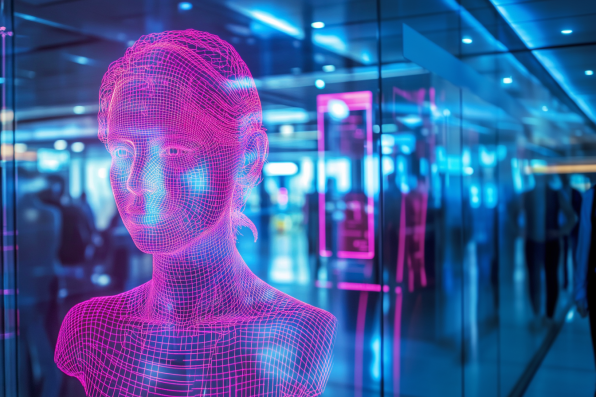
Related materials