The Secret of Numbers 3, 6, 9: The Charm of Mathematics
Mathematics is often called the language of the universe, and there is great truth in this statement. In the world of numbers, 3, 6, and 9 occupy a special place. They appear in nature, science, and culture, creating interesting connections and patterns. Nikola Tesla, the genius inventor of the 20th century, once said: "If you knew the magnificence of the three, six and nine, you would have a key to the universe." Although this claim may seem exaggerated, it reflects the significance of these numbers in our understanding of the world.
1.Mathematical Properties
The numbers 3, 6, and 9 have unique mathematical properties. 3 is the first odd prime number and a Fermat number (2^2^n + 1). 6 is the first perfect number, as it equals the sum of its divisors (1+2+3=6). 9 has the special property that the sum of digits of its multiples is always equal to 9. For example, 9x3=27 (2+7=9), 9x12=108 (1+0+8=9). These properties are not only interesting but also useful in performing arithmetic operations. More here.
2. In Nature
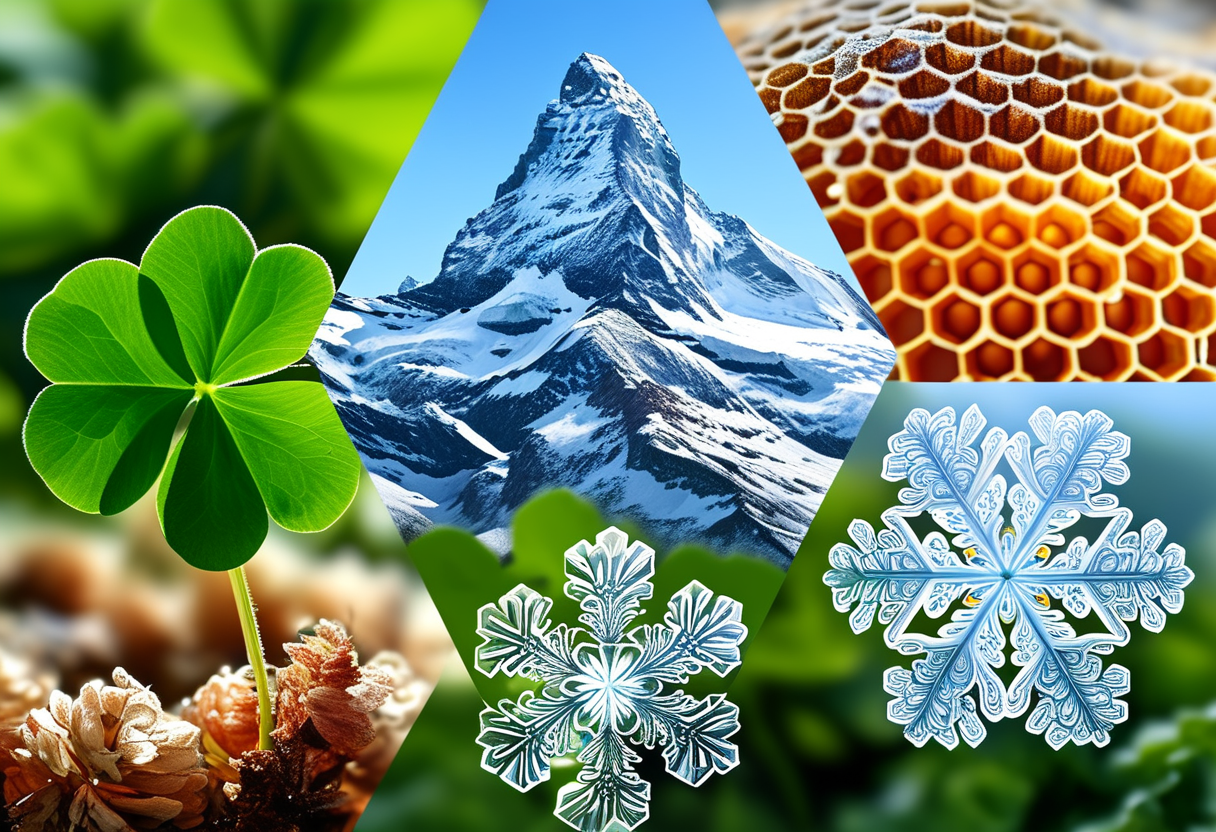
Nature seems to have a preference for these numbers. Many plants have 3 or 6 leaves, while honeycomb cells are hexagonal. This phenomenon is related to efficient energy use and optimal space filling. The hexagon, for example, allows maximum filling of a plane without leaving gaps. Similarly, many crystals and minerals have triangular or hexagonal structures. These patterns show how nature "uses" mathematics to create efficient structures. More here.
3. In Science
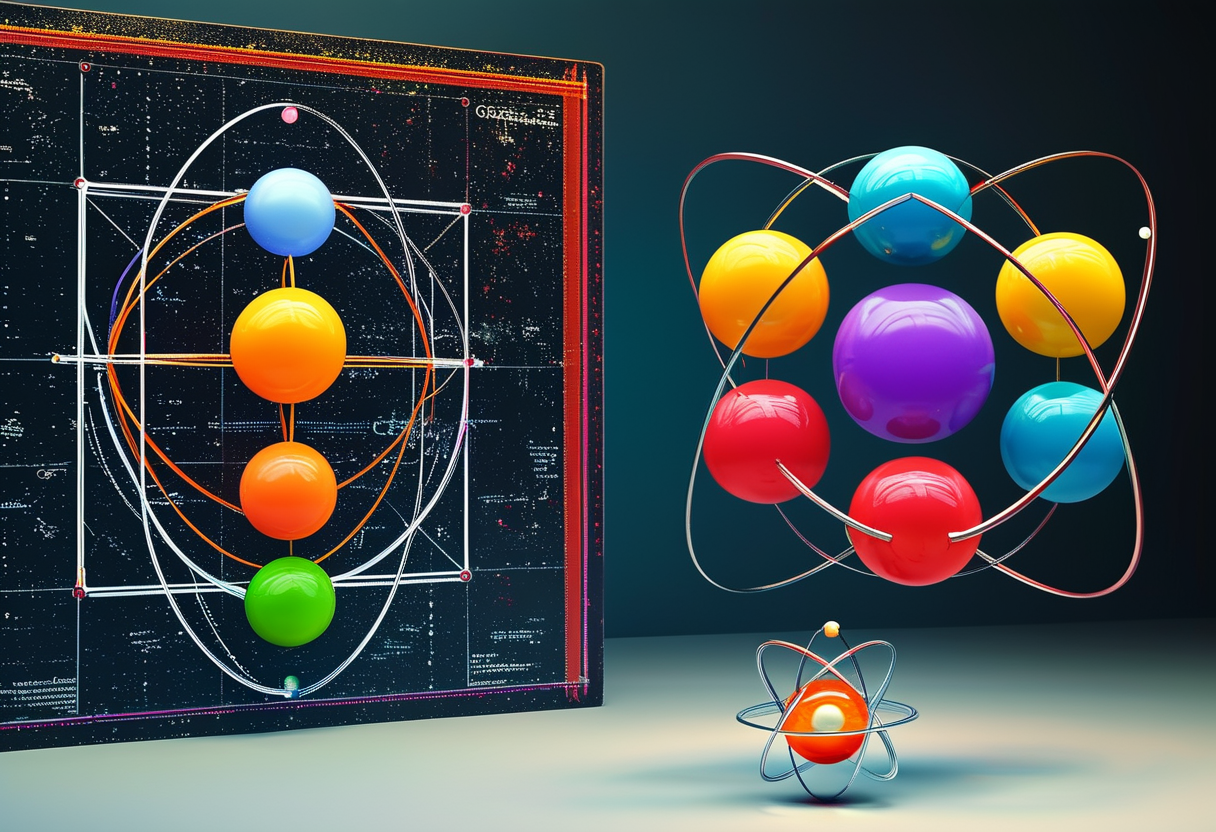
These numbers also play an important role in science. We live in a three-dimensional space, which consists of 3 main directions: length, width, and height. In quantum physics, there are 6 types of quarks that form the basic structural units of matter. Quarks are the smallest known particles. They are so small that we cannot see them even with the most powerful microscope. These quarks - up, down, charm, strange, top, and bottom - pair up to create more complex particles. In chemistry, the carbon atom, which is the basis of life, has 6 electrons, while the nucleus of a hydrogen atom consists of 3 quarks. More here.
4. In Culture and Religion
The numbers 3, 6, and 9 have deep roots in various cultures and religions. In Christianity, there is the concept of the Holy Trinity, while in Chinese culture, 9 is considered a lucky number. In ancient Greek philosophy, 3 was considered a perfect number because it had a beginning, middle, and end. Hinduism has 3 main gods: Brahma, Vishnu, and Shiva. Buddhism has 3 treasures: Buddha, Dharma, and Sangha. These examples show how these numbers have penetrated human thought and beliefs. More here.
Conclusion.
The study of numbers 3, 6, and 9 reveals the beauty and universality of mathematics. These numbers are found everywhere - in nature, science, and our culture. Although they may not contain the "key to the universe" as Tesla suggested, they undoubtedly help us better understand the world around us and the role of mathematics in it. The study of these numbers shows that mathematics is not only an abstract science but also a fundamental part of our reality that reflects the structure and patterns of the universe. Mathematics is more than just numbers and formulas. It is a powerful tool for understanding and describing our world. The example of numbers 3, 6, and 9 shows how simple numerical relationships can reflect complex and deep connections between different aspects of our reality. This knowledge can be useful not only for scientists and mathematicians but for anyone interested in uncovering the secrets of the world.

Related materials